Messaging Roundup: Finding words, taking action


Hi Resisters,
We made it through another week. As usual, there’s lots on our mind. This week we bring you a reflection on finding language for what’s being done in our name, along with some updates on how we’re getting organized to protect against ICE.
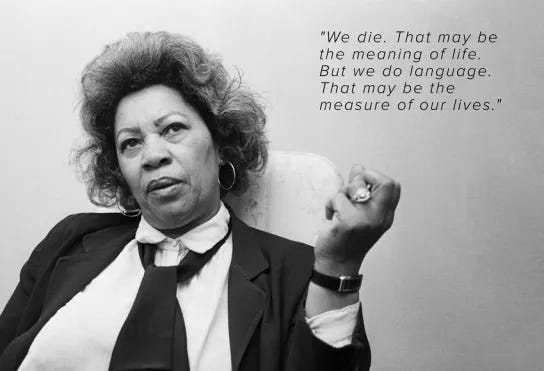
From Toni Morrison’s Nobel Prize Speech, Image Credit: Bronze Butterfly
When there are no words
By Kate Dalton
For the past couple weeks, I’ve been mulling over what to call the targeted killing of people on boats in the Caribbean. Part of it has to do with the horror of what we’re learning about these actions, along with a persistent desire to get the words right so other people will care.
But there’s another less optimistic part of me that wants to describe these killings accurately, because I’m actually not sure we can get enough people to care. So I want to frame the events in the right way to engage in the time-honored practice of those who lack power: naming injustice.
It’s these various parts of myself that are speaking to each other when I see or hear the news related to the boat strikes, and I’m not alone–many others have also been deliberating over the right phrasing. While we’ve heard some people refer to the boat strikes as “war crimes,” there are those that counter, “Don’t call it a war crime. That legitimizes the strikes too much. There’s no war. Call it murder.”
And so the debate in my head begins. Murder? War Crime? Something else entirely?
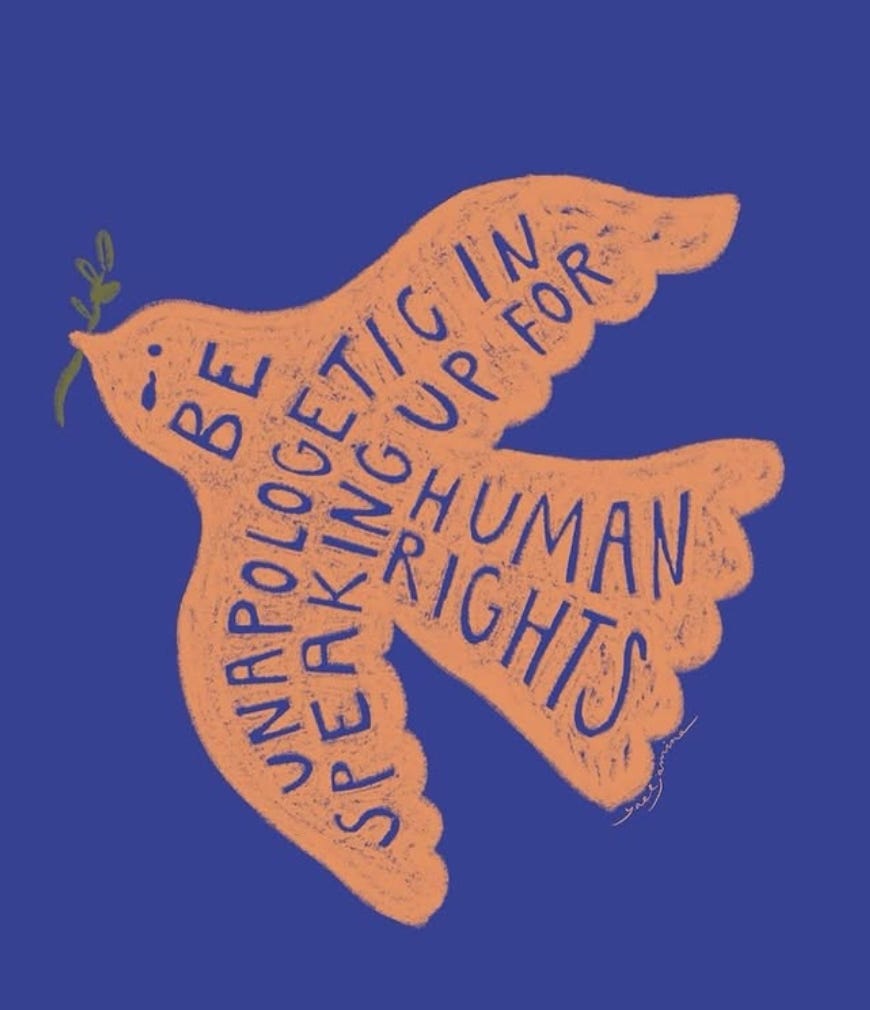
Image Credit: @not_controversial_ on Instagram
On the one hand, framing it as murder makes sense. “Murder” is unjustified, an abject moral failure, a chaos agent befitting this regime. On the other, calling it a “war crime” has the advantage of emphasizing the horrific abuse of power, the egregious imbalance, and disdain for human life at scale. “Kill them all” was the directive after all.
“War crime” also connotes The Hague. This connotation suggests a potential for future accountability, with justice meted out from an international authority, punishment for crimes against humanity.
However, while “war crime” has its rhetorical merits, the term is not technically or legally accurate, and it plays into the regime’s justification that the strikes are necessary as part of some war effort.
Then we’re left again with “murder” which doesn’t feel sufficient for the particular injustices we are seeing. Perhaps we need phrasing that reflects the breadth of the violation by our government. How about “random acts of lethal violence”? After all, our country is using its military to target people seemingly on a whim. Further, the government has produced no evidence that the people on the boats are drug traffickers, and the overall justification lacks coherence.
But these boat strikes aren’t just isolated acts. They fit within a larger pattern of state-enacted terror, which treats so many people–especially nonwhite people–as expendable. How do we account for that, and for the repeated abandonment of due process and often any process at all?
Thinking of all these questions around naming these horrors, I find myself returning as I often do to Toni Morrison’s brilliant meditation on language in her Nobel Prize acceptance speech. In it, she writes of the near sacred power of words, but also of their ultimate limitations, especially during times of extreme loss. She points to Lincoln’s Gettysburg Address as emblematic of this, in its “deference to the uncapturability of the life it mourns.”
Morrison recognizes that “language can never live up to life once and for all. Nor should it. Language can never ‘pin down’ slavery, genocide, war. Nor should it yearn for the arrogance to be able to do so. Its force, its felicity is in its reach toward the ineffable.”
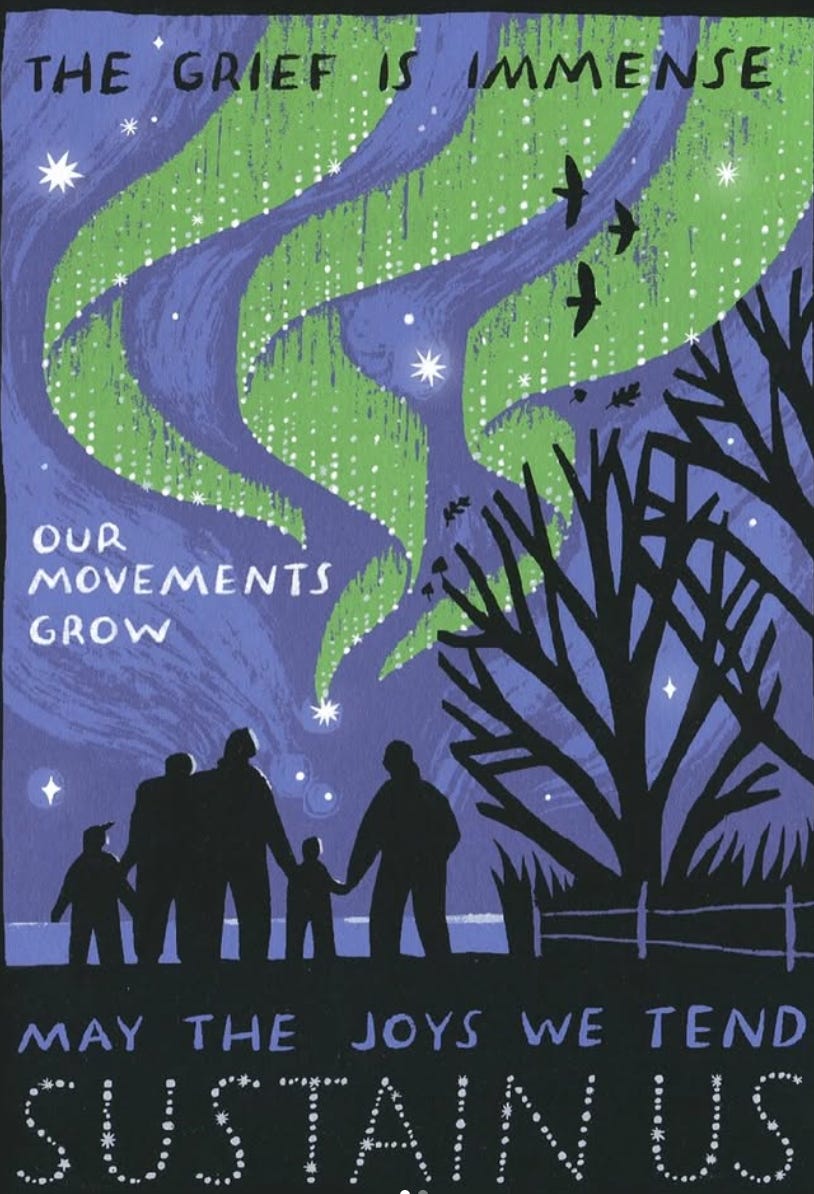
Image Credit: @olly.costello.art
Maybe the inadequacy of our words is appropriate for our times too. Like Morrison notes, we’re tasked with trying anyway. We won’t adequately convey this regime’s recklessness with life and abuse of power, but we reach toward the ineffable, carrying the heaviness of what’s been lost.
We also keep reaching because what’s behind our language is a clear fact: all too often this regime, and the system that enables it, treats people with a total lack of care, whether we’re talking about Supreme Court Justice Kavanaugh legitimizing racial discrimination, the ongoing ICE abductions, or a person clinging to the remnants of a boat in the Caribbean. We don’t need to “pin down” these horrors, but we have a responsibility to take care–with our attention, with our actions, and with our words, however inevitably imperfect they may be.
Getting organized
Last Saturday, nearly 700 Brooklynites gathered in the vast sanctuary of a pentecostal church in Windsor Terrace to learn how we can disrupt our government’s authoritarian overreach and protect the people most vulnerable to its depredations. At least 10 Brooklyn Resisters were among them - a solid BKR representation!
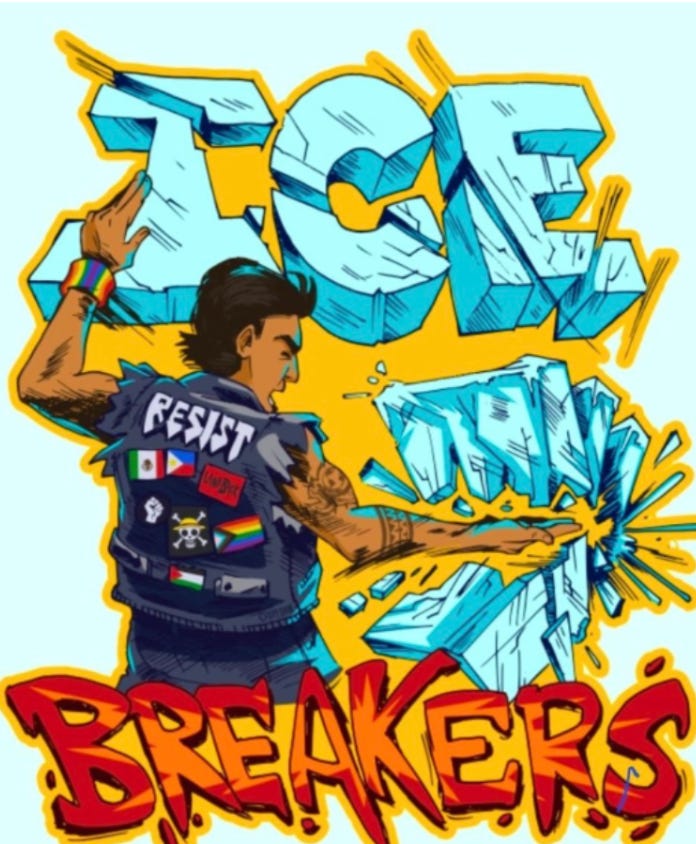
Image Credit: Just Laine on Bluesky
For the last part of the training, we broke into neighborhood groups based on geography. The purpose of these groups was to build on the lesson learned in DC, Chicago and elsewhere, that the best way to stop ICE and co. from kidnapping people is to develop hyper-local networks for rapid response. More broadly, to truly stop an authoritarian regime, we need NUMBERS - people who will speak out, offer protections, take to the street when necessary - and we don’t have them right now. So we need to be talking to our neighbors, and our neighbors’ neighbors, inviting them into this work, in big ways and small.
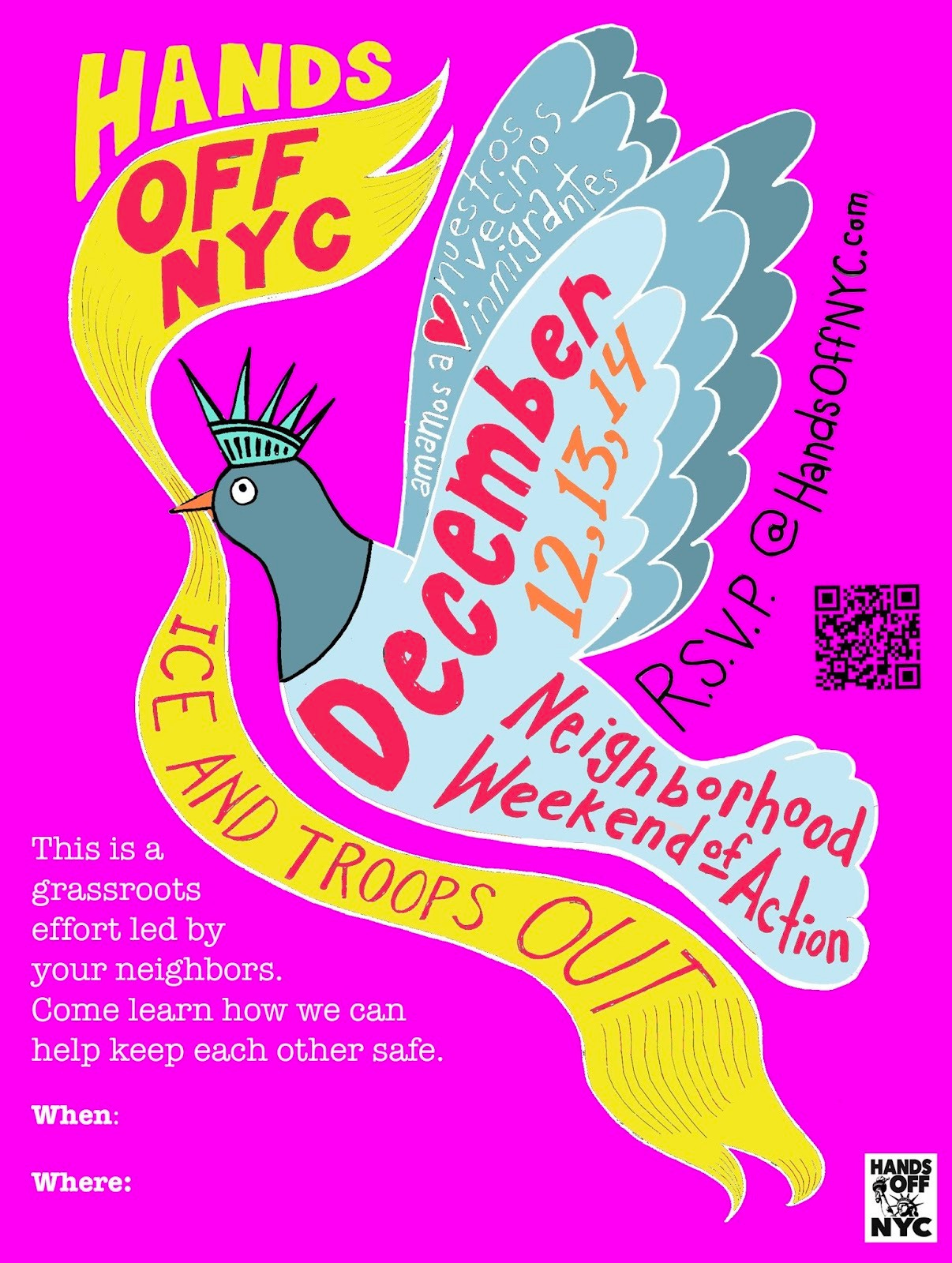
And that’s where this weekend comes in. As part of Hands Off NYC’s citywide Weekend of Community Action, the Brooklyn Resisters have pulled together nine neighborhood events where we can meet our neighbors where they are, engage them in conversation about what is happening in our country right now, and offer them essential information on our rights and our power in this moment. We hope you’ll sign up, bundle up, and join us for one or more of these activities! You can register here.
(Art credit: Julie Peppito)
Amplify this:
Let’s celebrate the wins–this week Dems flipped seats in Miami and Georgia, Trump took a lot of Ls yesterday, and Kilmar Abrego Garcia is released from ICE custody.
Looking to get read up on non-cooperation? Here are some great materials.
“You cannot make authoritarian leaders the center of your narrative. You have to make the people the center of your narrative.” Advice from El Salvador’s Claudia Ortiz and other opposition leaders around the world, in The Guardian.
We’re still not over Megan being featured in this excellent Guardian piece on the rich history and power of zines.
We ❤️ the community & Mr. Rogers vibes in Brad Lander’s campaign kickoff video.
Our very own Brooklyn Visibility Brigade continues to do amazing work.
NYC’s resistance against ICE, in NY Mag
“I wish I would have been told as a kid…” from our friends at Embrace Race
Is it too late? No. But We Must Better Understand the Nature of the Battle By Sherrilyn Ifill
And as always,
‘Til Next Time,
Kate, Julie & the Messaging Team
 | A guest post by
|
 | A guest post by
|