Messaging Roundup: Connection as a political act


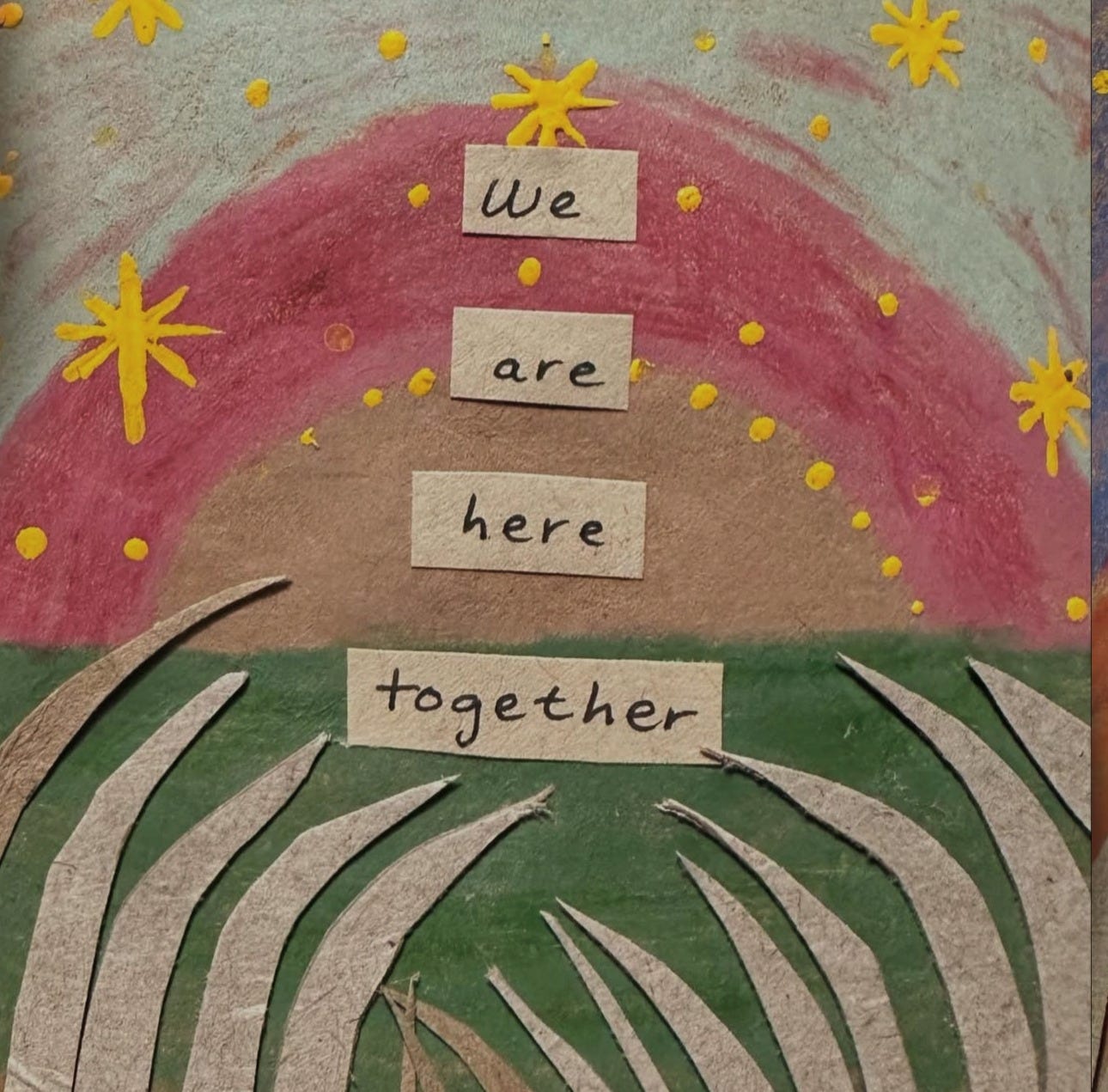
(Art credit: sarahholstart on Instagram)
The politics of loneliness
By Julie Subrin
Last month, on Election Day, The New York Times served up this take on our mayor-elect’s popularity: “A Little Noted Element Propelled Mamdani’s Rise: Gen Z Loneliness.” It sounds sympathetic enough, but keep reading, and it’s hard not to discern an undercurrent of disdain: “Addicted to their phones,” the writers observe, “strapped for cash, spiritually unmoored and socially stunted by the pandemic, young New Yorkers needed a reason to get out of the house. They found it in Zohran Mamdani’s mayoral run.”
Accompanying the piece are photos and looping videos of Gen Z-ers sporting cute Zohran T’s, crafting with beads, and partaking in a city-wide scavenger hunt. One video captures an unshowy 20-something at a rally, dancing somewhat self-consciously to music we can’t hear. Ultimately, the article seems to suggest, the movement is sweet, naive, a little cringe, and essentially apolitical.
This piece irritated me—first, because it all but erased the possibility that Mamdani’s vision, his ideas, might have played a part in his campaign’s extraordinarily effective mobilization of young people.
But beyond that, it was the framing of loneliness as some sort of sad-but- couldn’t-be-helped generational malady that irked me. We know, of course, that loneliness is part of the human condition, and that COVID made it worse. But also, and significantly, today’s “loneliness epidemic” is not apolitical. It’s a byproduct of forces working against all of us: profit-generating algorithms that keep us endlessly scrolling; the glorification of individualism and consumerism over community care; and a fascist-leaning regime that wants us divided and suspicious of one another.
And here’s where all this gets personal. If I’m being honest, part of what fuels my activism these days is a desire for social connection. I work from home as an independent contractor, in a neighborhood that’s farther than walking distance from my closest friends. But it’s more than social isolation that led me to the BK resisters. Though I didn’t realize it at the time, I was looking for what Joelle calls “a political home”—a group of people who, like me, feel an overwhelming sense of urgency to respond to the lies, greed, and cruelty this regime has unleashed. Finding friends here, whose company I truly enjoy, has been a happy bonus.
Similarly, these lonely Gen Z-ers could have found other ways to be social. There is every kind of meet-up you can imagine in this city. But Zohran’s campaign offered them something more: community driven by purpose. And not just any purpose, but specifically, a hopeful vision for our city that centers the needs of working people rather than the elite few.
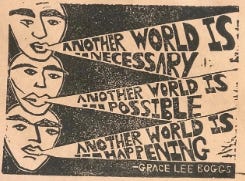
The powers that be don’t want Gen Z-ers talking to each other about the pain, fear and anger they feel inheriting a dumpster fire future. They don’t want you and me connecting the dots, realizing that corporations we rely on day in and day out are contributing to and profiting from the abduction, detention and dehumanization of people in our communities, and from genocidal wars waged abroad. And they definitely don’t want those of us who care about any of this to realize that we are stronger, more capable of making change, and yes, happier, when we connect with other people who want change, too. The system does not want us to be friends. Maybe the NYT doesn’t, either. But we know the power and joy of getting in community, whether that be hitting the streets, talking to our neighbors, folding zines, making art together, or the countless other ways we move with a political purpose together.
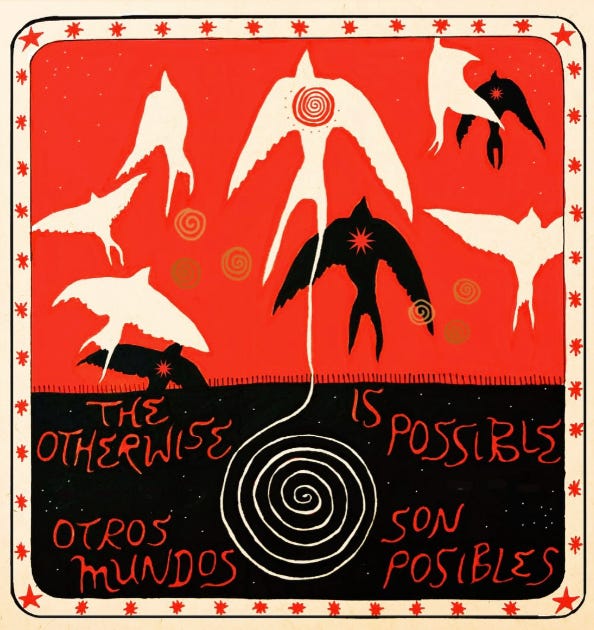
(Image credit: winsorkinkade_ on Instagram)
Getting grounded in connection
“We are beautiful. We are not alone. And collectively we’re powerful beyond measure.”
The above mantra was shared as a grounding technique in a piece passed along by Mandy in our “Amplify” channel last week. It’s a conversation between activist writer Kelly M. Hayes and organizer Aarron Goggans titled “Burnout Is Not Inevitable: Building Movements That Can Hold Us.” We were struck by how it sheds light on what brings so many of us to this work, and how we can take care of ourselves and each other in order to keep doing it. The whole piece is worth reading, but here are a few highlights:
On doing the next right thing:
AG: So much of what causes me to freeze is being like, everything I do, I can’t see in my head how it leads to ICE being abolished. I can’t see any action I could do that could meaningfully contribute to that. And I think that there is this thing that my mom taught me. It’s like you just got to do the next right thing. And the way to get out of a freeze I think is twofold, that you don’t try and solve the problem, you do the next right thing, and you’ll find that your body and your brain will come up with more options the more you try and do simple tasks that maybe don’t complete it, but help.
On “active hope” and getting into community:
KH: I’m reminded of Joanna Macy’s teachings around “active hope,” and how we can take actions that help us move toward the outcomes we want, and also, toward the values we want to see expressed. Sometimes, when we have no idea how to functionally impact the outcome of a thing that’s happening, we can still ask ourselves what values we want to see expressed in such a moment. Sometimes, that expression of our values might help us get unstuck, and figure out what the next right, substantive action looks like.
More than anything, I don’t want people who are completely stuck to get hung up on what’s “effective” right now. What’s effective is getting in motion, getting into communication and relationships with other people who share your goals and values. Whether that’s going to a march, or attending a training, or going to a vigil, breaking the cycle of passive reactivity is what’s going to allow us to be effective.
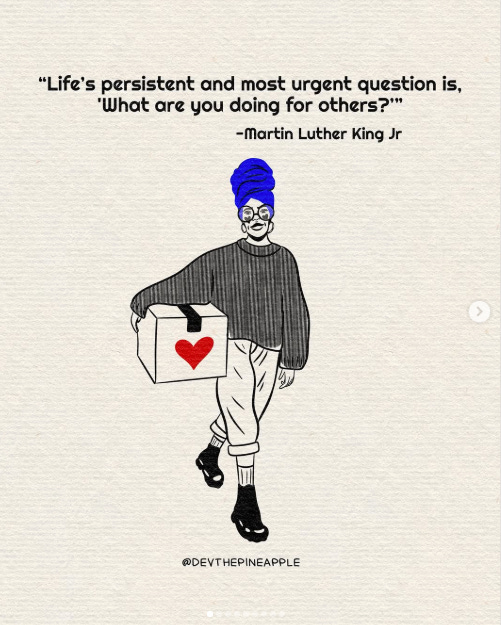
(Image credit: devthepineapple on Instagram)
On moving from a place of care:
AG: I think sometimes we don’t understand the value of faithful witness. We don’t understand that witnessing somebody in their struggle with an open heart and with grace is in itself an act of solidarity that is crucial and important. It keeps us in touch with our humanity. And when we witness people and we empathize with them and we move from that empathy to care, it is a more sustainable and often more effective action. . . .
When I think about my grandparents and the people that I love, they were always moving from a place of culture and moving from a place of care. And then the great things that they did weren’t planned. They were just responding from a place of values, responding from a place of care. And I think that care really should be at the center of our strategy, of our analysis, and of our praxis.
Amplify this
More vent diagrams for our messy times
“We must live con el corazón en la mano - with our hearts in our hands, as the compass that guides us” -Paula X. Rojas and more in this graphic depicting an address at Socialism 2025
Pete Hagueseth. And more Democracy Now
Counter-messaging for ICE recruits (h/t Julie P)
Another antidote to loneliness: trash pickup crews
Sabrina Carpenter to ICE: Hell no (h/t Cory)
The grift goes on: Meet David Sacks, Trump’s AI and crypto czar.
Advice for when you feel like you’re not doing enough, from Mariame Kaba
Hands Off NYC wants YOU to share your art.
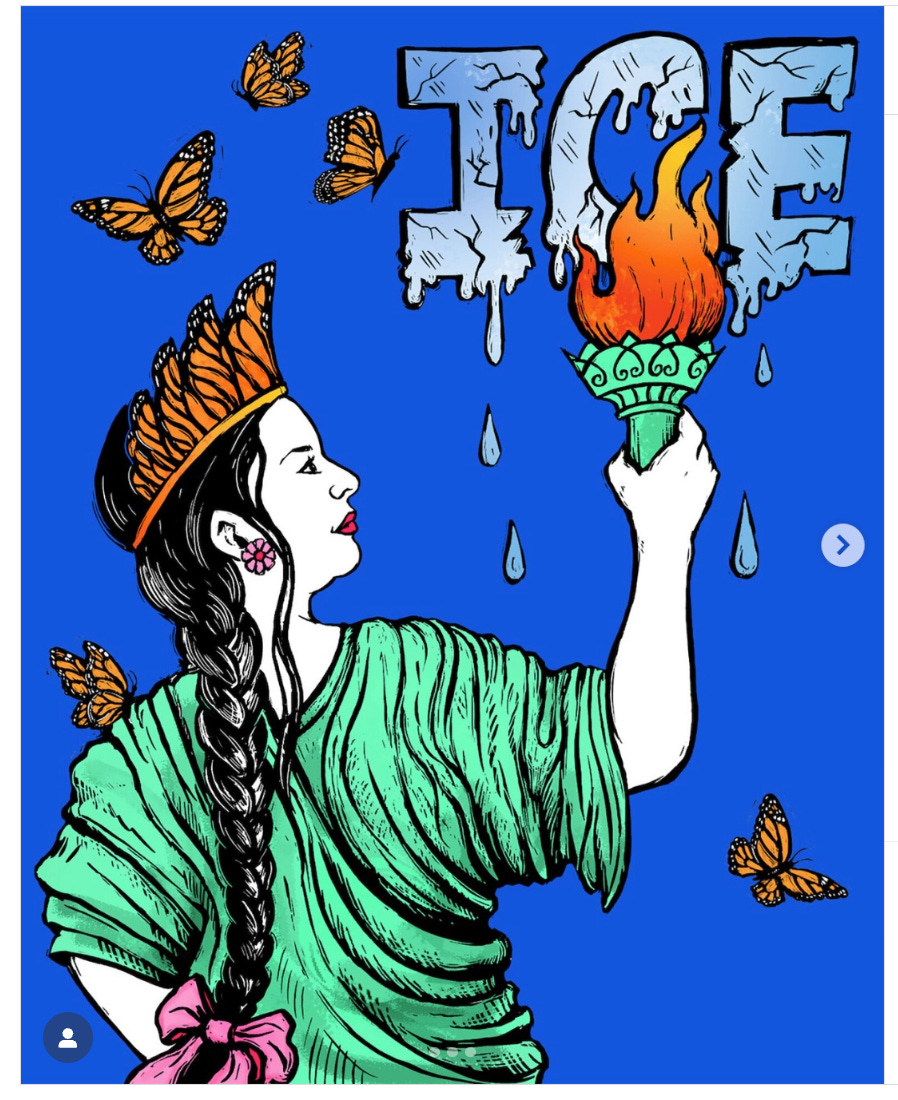
(Art credit: Nicole Schulman)
Our own Debbie Nathan will interview Laurie Bertram Roberts, a fierce Mississippi reproductive justice advocate and winner of the Ann Snitow prize, on Dec 9.
In Dedham, MA, a nativity scene with a message.
And as always,
‘Til Next Time,
Julie, Kate, & the Messaging Team
 | A guest post by
|
 | A guest post by
|